



How to Regrip Golf Clubs: A Step-by-Step Guide for Beginners
Introduction
Why Regrip Your Golf Clubs?
Golf grips get worn out with time and use. Dirt, sweat, and weather make them slippery and hard to control. Worn grips make it harder to hold the club. This can lead to missed shots and frustration. To regrip golf clubs gives better control and comfort. Fresh grips help you play your best game. Every golfer should learn this skill. It saves money and keeps clubs in top shape.
New grips give a solid, secure feel. Your hands will not slip when you swing. You will feel more confident on every shot. Regripping is not just for experts. Beginners can do it, too. You do not need special tools or skills. Just a bit of time and the right steps.
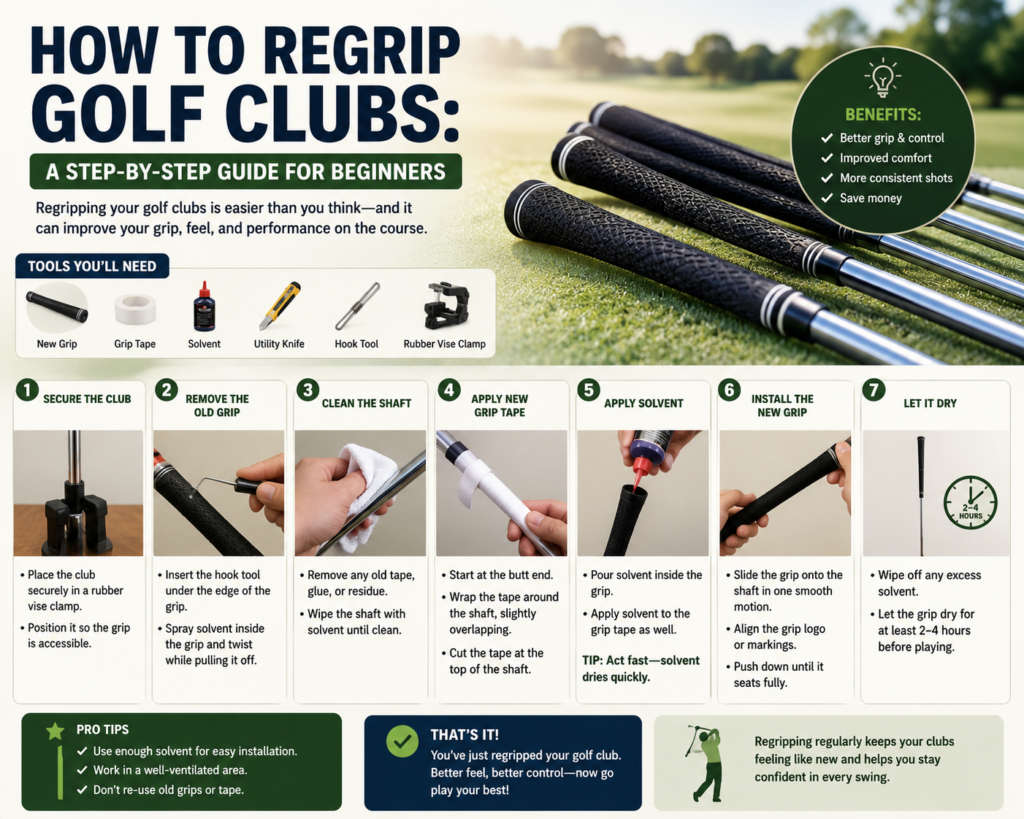
Knowing When to Regrip
It is good to check your grips often. Look for cracks, splits, or shiny spots. If grips feel slick or sticky, they need changing. Some golfers regrip once a year. Others do it more if they play a lot. Signs your grip needs replacing include:
- Grip feels hard or smooth
- You notice cracks or peeling
- Club slips during swings
- Grips look shiny or discolored
Golf club grips should feel firm and tacky. If they do not, it’s time for a change. Keeping your grips fresh helps your game. You get better results and more fun on the course.
Tools and Materials Needed
You do not have to spend much to regrip your clubs. Most items are easy to find at home or in stores. Here is what you need:
| Tool or Material | Purpose |
|---|---|
| New Golf Grips | Replace old grips |
| Grip Tape | Holds new grip in place |
| Grip Solvent | Helps slide grip on |
| Utility Knife | Cuts off old grips |
| Rag or Towel | Cleans club shaft |
Having these tools ready makes the job easy. Lay out all items before you start. This helps things go quickly and smoothly. Anyone can regrip their golf clubs with a step-by-step guide, the right tools, and a little patience.
Call Today To Discuss
Your Golf Travel Plans!
From TPC Sawgrass to the rugged cliffs of Pebble Beach, we provide exclusive access to the legendary fairways you’ve always dreamed of playing.
833 271-5050Choosing the Right Grip
Types of Golf Grips
Golf grips come in a few main types. The most common are rubber, corded, and synthetic grips. Rubber grips feel soft and offer good comfort. Corded grips have small threads woven in, helping your hands stay firm in wet or hot conditions. Synthetic grips are made of man-made materials and last a long time. Each grip type gives a different feel when you swing. Think about where and how you play as you choose a grip.
Some golfers like a tacky grip, which helps their hands stick to the club. Others prefer a firmer grip for more control. If your hands sweat a lot, look for grips that help with moisture. Try holding a few types before you decide. This will help you pick the right one for your needs.
Grip Size Matters
Grip size is very important. Grips come in several sizes: undersize, standard, midsize, and jumbo. A grip that is too small or too big can change how you swing. Most people use standard size, but if you have small hands, try undersize. If your hands are big, look at midsize or jumbo.
Here is a simple table to help you compare grip sizes:
| Grip Size | Hand Size |
|---|---|
| Undersize | Less than 7 inches |
| Standard | 7 to 8.25 inches |
| Midsize | 8.25 to 9.25 inches |
| Jumbo | More than 9.25 inches |
Measure your hand from the tip of your middle finger to the wrist crease. Use this to choose your grip size.
Other Things to Consider
Think about the weather where you play most. Some grips work better in rain or heat. If you play a lot, you may want a more durable grip. Tour players often pick grips that match their swing style. As a beginner, comfort is the most important factor. Try a few different grips at the store if you can.
Ask for help at your local golf shop. Staff can guide you to grips that fit your needs. They may also have samples you can feel. The right grip will make your game more fun and help you swing better.
Removing the Old Grip
Getting Ready to Remove the Grip
Before you start, gather your tools. You need a utility knife, grip remover, and safety gloves. Find a flat space to work. Lay a towel or cloth down to catch any mess. Make sure your golf club is steady so it does not roll or move during the process. Put on your gloves to protect your hands from cuts and chemicals.
It helps to keep a trash bag or can nearby for the old grip pieces. You do not want old grip scraps on your floor or work area. If you have double-sided tape ready for later, set it aside for now, but within reach.
Cutting Away the Old Grip
Start by holding the club securely on the flat surface. Take your utility knife and carefully cut along the length of the old grip. Cut away from yourself for safety. Slice just deep enough to get through the rubber grip, but do not press too hard. Cutting too deep can damage the shaft underneath.
Peel the split grip from the club shaft. Sometimes, you may need to cut on both sides if the grip sticks. If you have trouble, use a grip remover tool to help lift stubborn pieces without harming the shaft.
Cleaning the Shaft Before Regripping
After the old grip is off, you will see leftover tape or glue on the shaft. Use your utility knife or scraper to peel off the tape. Work carefully to avoid scratching the club. If any sticky residue stays, use grip solvent or rubbing alcohol on a cloth to wipe it away.
Make sure the shaft is smooth and clean before you move to the next step. This helps the new grip stick well and makes your club feel new again. Keep the work area tidy so you can move right into applying the new grip when ready.
Call Today To Discuss
Your Golf Travel Plans!
From TPC Sawgrass to the rugged cliffs of Pebble Beach, we provide exclusive access to the legendary fairways you’ve always dreamed of playing.
833 271-5050Preparing the Club and New Grip
Removing the Old Grip and Tape
Start by taking off the old grip from your golf club. Place the club on a sturdy surface. Use a utility knife or special grip-removal tool to cut through the old grip. Cut away from your body for safety. Peel away the grip and throw it in the trash. Next, look for the old grip tape under where the grip was. Use the knife to lift the tape edges. Pull the tape off as much as you can. If some tape sticks, use a cloth with a bit of grip solvent to rub it away. Make sure the shaft is clean and free of sticky spots.
Cleaning the shaft is important. Any leftover glue or debris can stop the new grip from sticking well. Use a towel to wipe the shaft. Double-check that all tape and dirt are gone before moving on to the next step.
Measuring and Applying New Grip Tape
Take your new grip and compare it to the club shaft. Place the grip next to the shaft to see how much tape you need. Most golf grips need at least one layer of double-sided grip tape. Measure the tape and cut it to match the length of the grip. Wrap the tape around the shaft in a smooth, even way. Make sure the tape covers the whole spot where the grip will go. Leave a little extra tape hanging off the shaft end. Fold this extra tape into the hole at the top of the shaft.
Smooth out any bumps or wrinkles in the tape. Use your hands to press the tape down firmly. This helps the new grip slide on easily. Double-check that the tape covers the entire area where the grip will be placed. A smooth tape job gives the best results.
Getting the New Grip Ready
Get the new grip and grip solvent ready before you start. Hold the new grip upright and cover the small hole on the end with your finger. Pour some grip solvent into the grip. Swish the solvent around inside the grip for a few seconds. Then, pour the extra solvent over the tape on the shaft. This makes the tape slippery and helps the grip slide on.
Set the grip and shaft close together on your work surface. You are now ready to slide the new grip onto the club. Having everything ready makes the final steps much easier.
Installing the New Grip
Preparing the New Grip
Take your new golf grip out of its package. Make sure it is the right size and style for your club. Check for any damage or defects before you begin.
Hold the grip in your hand. Look at the design so you know which way it should face. Some grips have logos or lines to help with alignment.
Keep your work area clean. Lay out your supplies like grip tape and solvent nearby. This helps make the process easier and smoother.
Applying Grip Tape and Solvent
Wrap double-sided grip tape around the shaft. Start at the top and work your way down. Make sure tape covers the area where the grip will sit.
Tear off any extra tape hanging over the end of the shaft. Use your finger to push the excess tape inside the shaft opening. This seals the top.
Pour a good amount of grip solvent inside the new grip. Cover the open end of the grip with your finger and shake it gently to coat the inside. Then pour the remaining solvent evenly over the taped shaft. The solvent makes it easy for the grip to slide on.
Sliding On and Aligning the New Grip
Hold the club at a downward angle. Quickly slide the new grip over the taped part of the shaft. Push it on in one smooth motion.
Make sure the grip is all the way on. The end of the club should fit snugly against the closed tip of the grip. Check the alignment of any logos or patterns so they face the right way when you hold the club.
Wipe off extra solvent that leaks out. Place the club on a flat surface and let it dry. The grip should sit untouched for at least one hour before use.
Curing Time and Maintenance
How Long to Let New Grips Cure
After you finish regripping golf clubs, the curing time is important. Grip solvent needs time to dry and set the new grip in place. Most experts suggest waiting at least 4 to 6 hours before using the club. Some golfers wait overnight to be safe. The drying time can depend on the type of grip solvent used. Check the instructions on the bottle for the best results. If you use your club too soon, the grip might slip or twist. This could make your swing less accurate and your grip less secure.
Best Practices for Maintenance
Once your grips are set, you want them to last. Clean your golf grips often to keep them tacky and free of dirt. Use a damp cloth or a gentle brush with mild soap. Rinse off any soap with clean water and dry the grips with a towel. Try not to leave your clubs in direct sunlight for long periods. Heat can damage the grips and make them wear out faster. Store your clubs in a cool, dry place when not in use. Check your grips for signs of wear, such as cracks or smooth patches. Replace them if they start to feel slick or hard.
Common Issues and Solutions
Sometimes grips do not set correctly, even after the right curing time. If your grip feels loose or if you notice it twisting, you may need to reapply grip solvent. Remove the grip, apply more solvent, and repeat the steps for regripping golf clubs. Occasionally, grips will wear out unevenly. This often happens if you play often or practice with the same club. Rotate the clubs you use to help all grips wear evenly. Address any problems with your grips quickly to keep your golf game steady and safe.
Call Today To Discuss
Your Golf Travel Plans!
From TPC Sawgrass to the rugged cliffs of Pebble Beach, we provide exclusive access to the legendary fairways you’ve always dreamed of playing.
833 271-5050Conclusion
Key Points to Remember
Regripping golf clubs takes some basic tools and patience. A good grip helps you swing better and keeps your clubs in top shape. Make sure you have all your materials ready before you start. Use the right tape, solvent, and a new golf grip for each club. Cut off the old grip carefully and clean the shaft well. Take your time when sliding on the new grip so it goes on straight.
Benefits of Regripping Your Clubs
When you regrip your own golf clubs, you save money. Grips wear out over time and can make playing golf hard. New grips give you better control and help your hands feel more comfortable. You also get to pick the size and style of grip that fits you best. Regripping lets you check your clubs for any damage. Fixing small problems early keeps your clubs lasting longer.
Tips for Great Results
Always let the new grips dry for at least a few hours before using your clubs. Store your golf clubs in a cool, dry place to keep the grips fresh. If a grip does not look right, it is easy to remove and try again. Practice will make the process easier each time. Write down the steps or keep a checklist to help you remember what to do for next time.